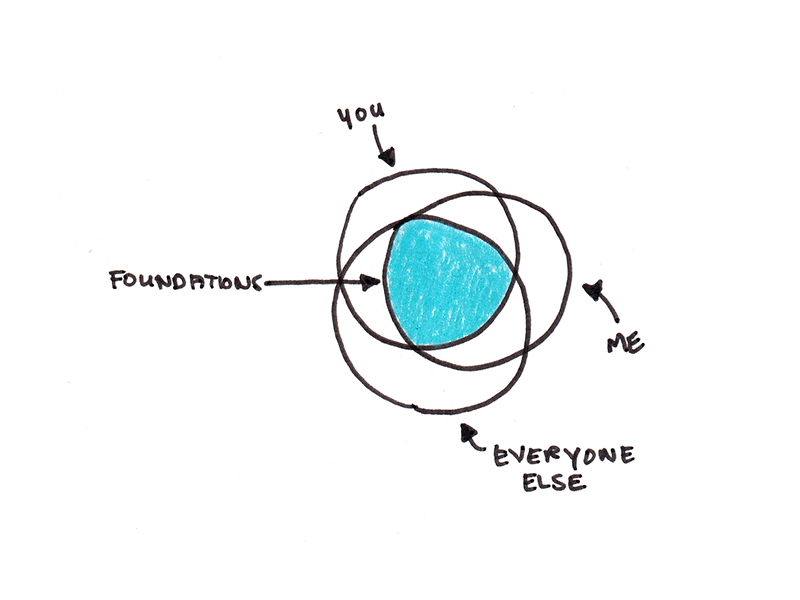
I think it’s amazing how we perceive ourselves when we do a self-assessment; how I see myself and who I am.
For example, when I held my first session for the foundations course, the first thing we did was fitness. There were lots of people who claimed to have a great fitness routine already.
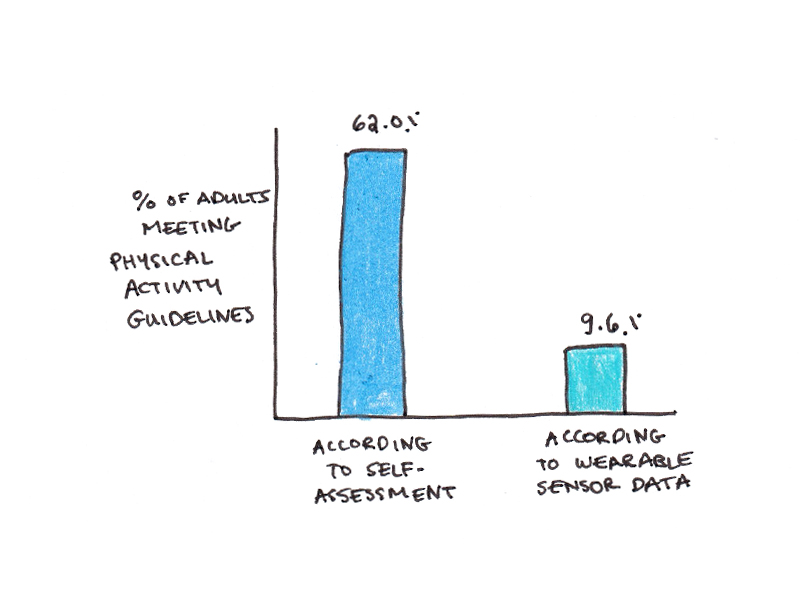
That could be because of the reader base. Are you all really so fit? Or it may just be a case of people putting too much faith in their survey results, as most survey results show that the majority of people feel they are exercising in accordance with the guidelines. In reality, the percentage of people that exercise as prescribed in the guidelines is less than 10%.
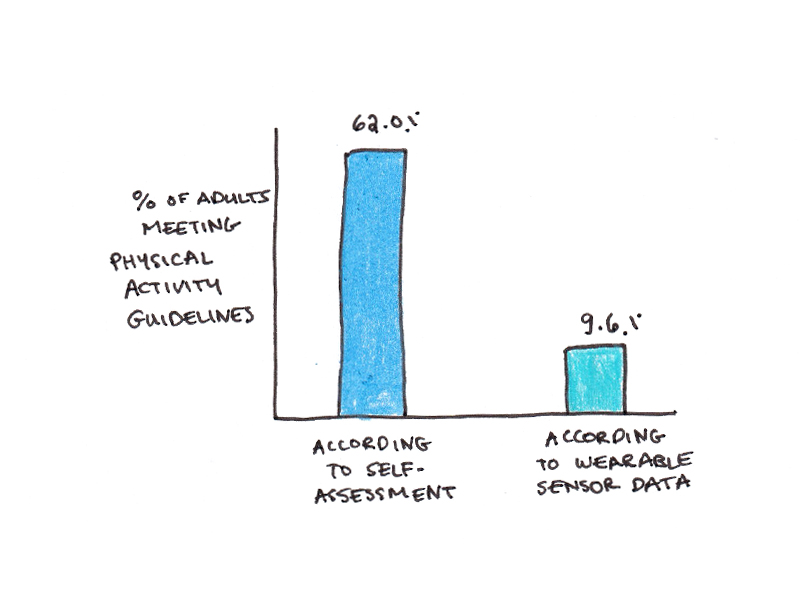
Fitness seems to be an area where we have an overly-rosy self-assessment.
Now compare that to the second month in the course, productivity. Instead of optimism, here the median response was about how dismal their productivity was. And, since this is a paid course, many of the students are high-earning knowledge workers who, at least according to the economic definition of productivity, are some of the most productive people on Earth.
Why the disconnect? Why are we so cheerful in our estimation of our exercise, yet so hard on ourselves when it comes to the work we’re doing?
Productivity: Tasks and Priorities
I think part of it has to do with how the entire genre of productivity advice has been sold in the first place: most advice focuses on getting a handle on tasks, whereas most people struggle more with priorities.
Task-focused advice is about how to get it all done: planners, calendars, to-do lists, batching, Kanban, Pomodoro. There are countless methods designed to make you more efficient and effective at tackling the infinite list of aspirations and responsibilities we all have.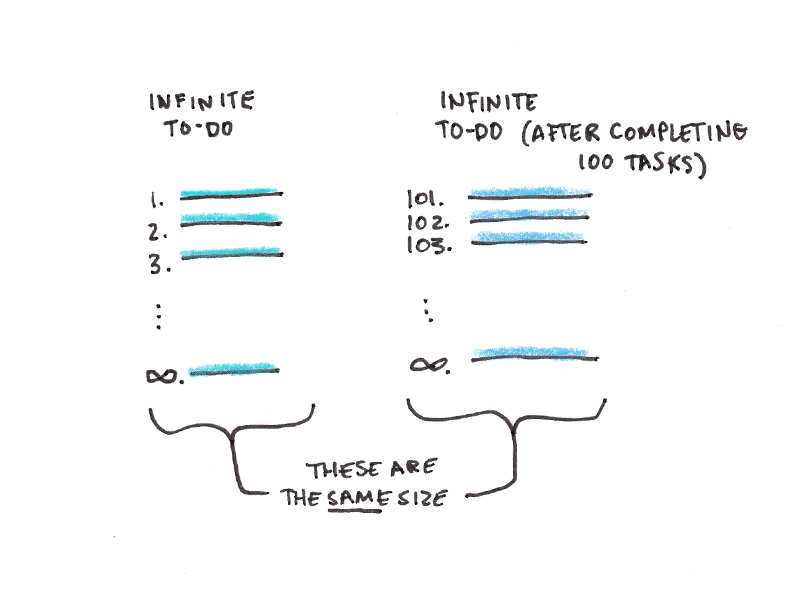
This puzzle, that the most objectively productive people feel the least productive, was on my mind when I recently reread Stephen Covey’s book, First Things First. I vaguely recalled this book being about weekly reviews and his productivity system. In my memory, it was mostly about scheduling activities on a weekly basis and prioritizing activities that were important but not urgent.
Upon re-reading, I realized that my recollection was mistaken. Most of the book actually argues against the task-focused productivity approach in the first place. The weekly review isn’t mostly about scheduling all your tasks for the week, rather it’s about asking yourself: What sort of life should I be trying to live?
The Compass and the Clock
Of all the late-80s self-help gurus, I like Stephen Covey the best. The folksy stories and aphorisms seem a little hokey today (he doesn’t even use the F-word!). But, compared to a lot of his contemporaries, Covey is wise and thoughtful.
One metaphor Covey relies on is contrasting a clock with a compass. A clock turns time into a measurable quantity that you can slice up, allocate and plan with—something you can manage. In contrast, a compass doesn’t give you a plan; all it can do is show you whether or not you’re headed in the right direction.
The problem of productivity, ultimately, isn’t that we’re not doing everything we would like to (we never are), or that we couldn’t possibly use our time and energy better (we always could). Instead, it’s wanting to feel satisfied with how we use what limited time we have available.
The aim of productivity should not be to worry obsessively about how much we get done. Instead, it should be to feel, at the end of the day, that our time wouldn’t have been better spent doing anything else.
Ultimately, we need to create a vision for our lives and regularly ask ourselves whether we’re actually living up to it. Tasks, projects and purposes will take as long as they need to reach fruition. Our only job is to ask ourselves what really matters and have the conviction to stick with that.
The Weekly Review
Weekly reviews have been a regular occurrence in my life for most of my adult life, but they have typically been focused on tasks – what is on my schedule, what I would like to accomplish, what should be on my to-do list for the upcoming week, and what will be pushed back to a later time.
This is a helpful thing to do. Even though things rarely happen exactly as planned, the plans you make are still extremely valuable. However, I now see that this is only half the weekly review process, and this first half is far less important than the second half.
Weekly reviews are not about logistics; they are not for detailed schedules for every moment of each week, nor are they to accurately identify which tasks on your to-do list will need to be completed. Rather, the purpose of the weekly review is to take 5-10 minutes to look at what matters most to you, and then to ensure the next week is your best effort to live your life according to those things you identified in your review.
I’ll give an example: If I reflect deeply, my kids and family matter more to me than my work. My kids are at an age when childcare can be tricky. This often results in my taking time off or getting less done. In the moment, my first response is often to chastise myself for not being more productive—looking at my to-do list, I definitely get less done than I did when I was single and child-free.
But if I step back, I realize that this isn’t a failure of productivity, instead it’s me being my most productive self. At this stage of my life, I’d rather get less done and have work subordinated to family. A weekly review that reaffirms this for me transforms the frustration of being interrupted with recognition that those very interruptions are my true priority in life.
Here’s another example: I often do a lot of reading and research. Prepping my last book was a multiyear research odyssey. If I compare myself with other authors, it’s clear my desire to drill down into academic research is a bit of a handicap. I could probably sell more books (and write them faster) if I focused on catchy stories and soundbites rather than complicated science.
But, stepping back again, I realize that understanding the world is one of my driving values. Spending “too much time researching” isn’t a mistake given that trying to grapple with the complexity of life is more important to me than producing soothing simplifications.
Building Your Compass
This all sounds good, but what if you aren’t sure what your values are? How do you actually make those difficult decisions to trade-off various parts of your life—and be satisfied with whatever consequences those choices naturally lead to?
I slightly differ from Stephen Covey’s philosophy about having a personal mission statement. Covey places a large emphasis on writing a personal mission statement unattainable in terms of its vagueness and lack of specificity. Most people write mission statements that are either too general and become platitudes (e.g., “I will serve humanity.”) or so specific that they limit the potential of the future (e.g., “I will serve humanity by providing the best quality assurance in the refrigerator repair business.”).
Instead of developing a new mission statement, I believe everyone has values already. You may not be able to define them in words, but you know in your heart your true values and what is most important in your life versus what you feel you must achieve based on the judgment of others.
You are not attempting to write a new mission statement; you will want to continue to ask yourself “why” until the answers are evident to you.
Take a piece of paper, and go through your list of things to do. For each item, ask yourself “why?”
agenda. Keep asking until you either get to a motivating reason that is intrinsically compelling to you or you realize that there isn’t a good reason for you to be doing it. (In which case, strike it off your to-do list or find a way to get out of doing it at the earliest opportunity.)
This doesn’t have to be limited to inspiring stuff. “Get the leak fixed in my house” may not spark joy in your life, but it’s pretty easy to connect this task to deeper motivations about the material well-being of your home and family. Similarly, a tedious obligation you’re sticking to because you agreed to do it is easy to justify on the basis of being the kind of person who keeps their promises (and perhaps you will think twice before promising something like that in the future).
What this questioning does is identify the things you’re being motivated to do by more superficial reasons and those that truly resonate with you (e.g., “I want a six-pack so people will think I’m hot.” versus “I want to be healthy so I can continue to live well into old age.”). Even more, it also helps you recognize the things that truly matter to you that aren’t “productive” and so don’t normally fit into a task-oriented to-do list, such as building relationships, deep thinking and kindness.