This is a great way to develop your English and practice your IELTS reading skills. Learn some interesting vocabulary about an interesting topic. The questions are sentence completion which means you need to locate a word or words in the passage for the answer.
Reading Passage: Problems with Badgers
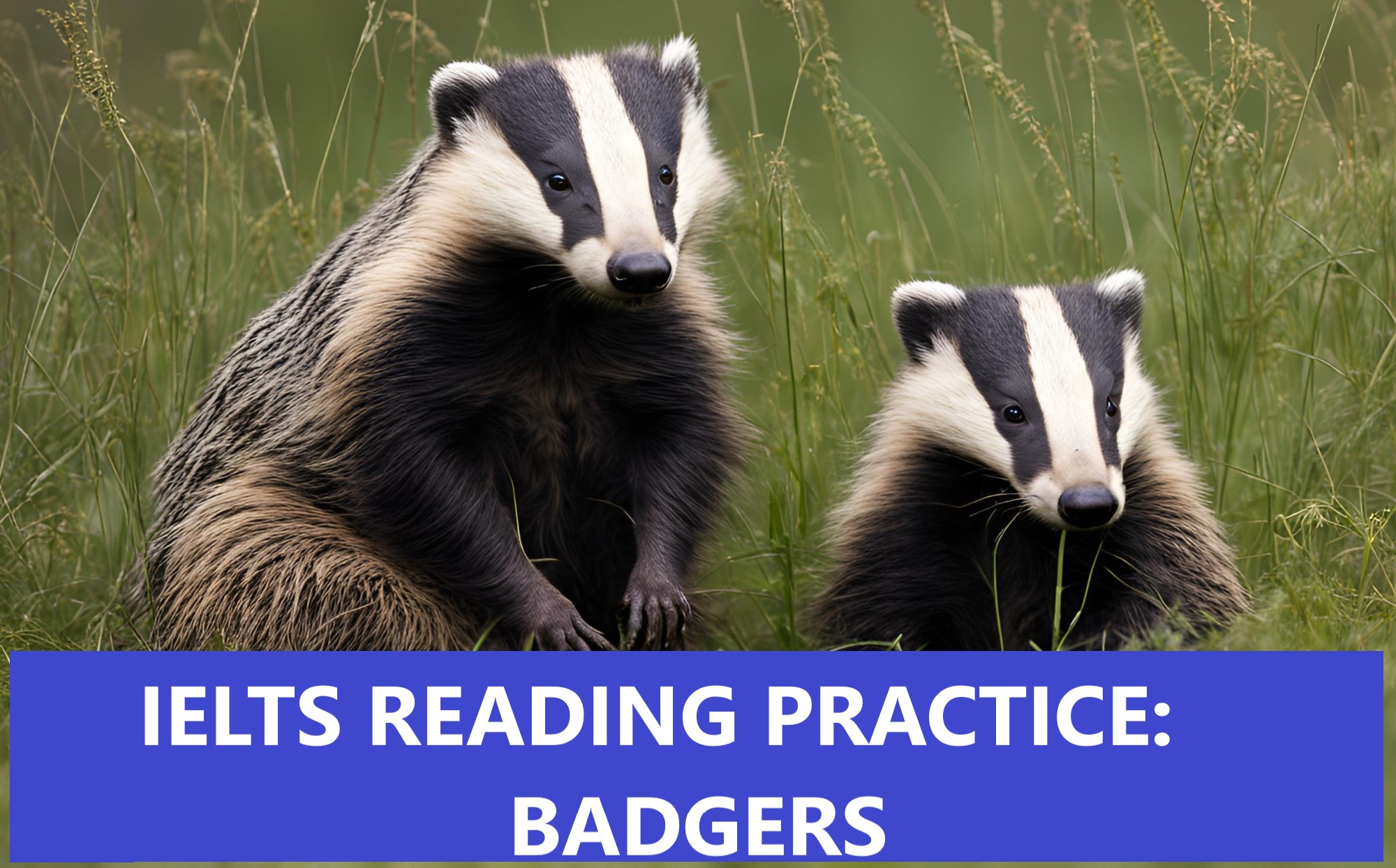
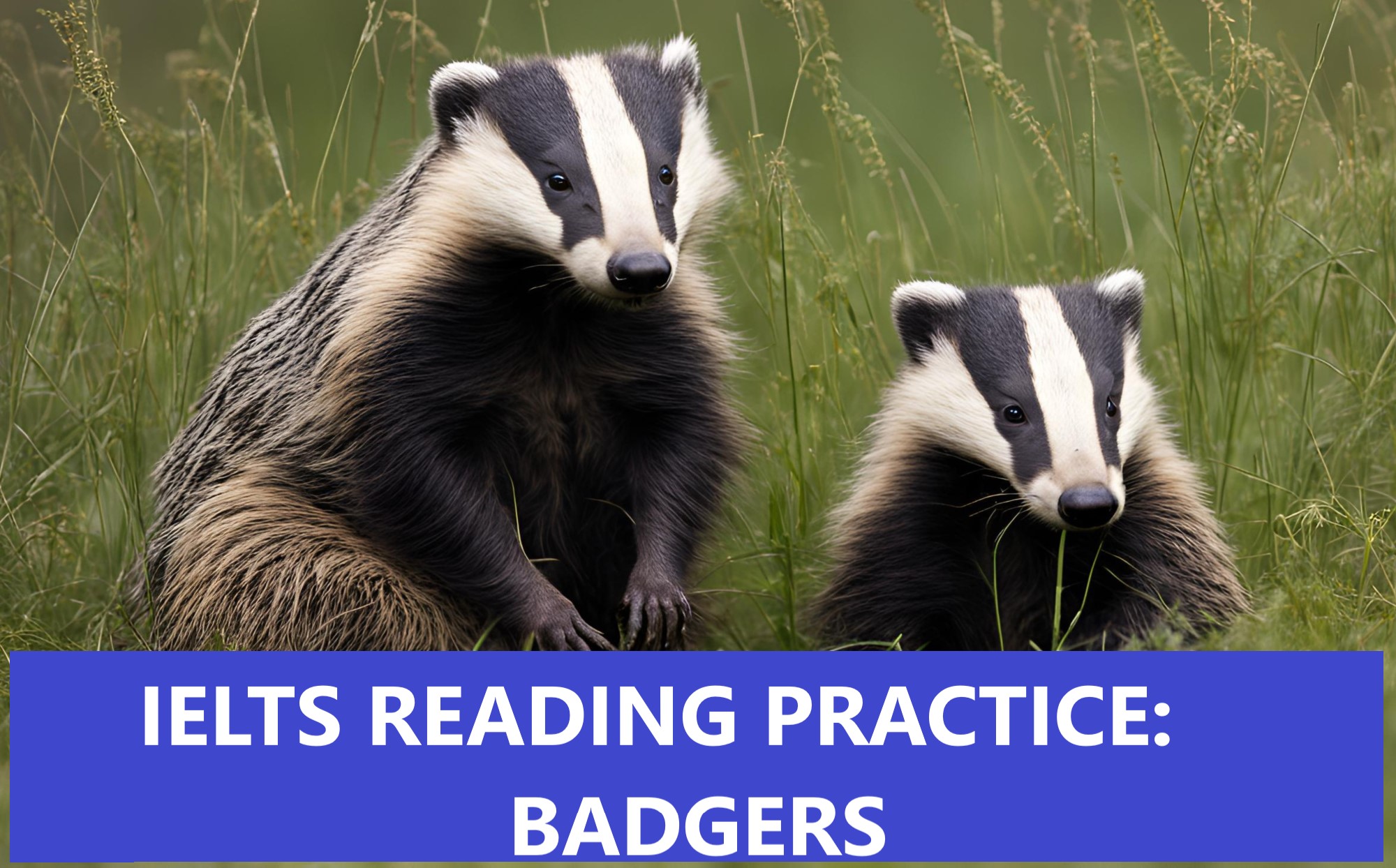
It’s nice to have badgers in your yard. Many homeowners enjoy seeing them every night. However, some people find them to be unwanted guests because they can destroy their beautiful yards and vegetable gardens. This is due to the fact that badgers are opportunistic eaters, and they don’t care about the time and effort that gardeners put into their gardens. As such, badgers frequently visit gardens during the night, but they are generally unseen and unheard. This is because they will quietly walk around a yard and look for food, such as earthworms, grubs, slugs, and snails. After eating, badgers leave behind only very few signs that they have been there – typically just a few small holes, which indicate where they have dug for food. If you suspect that a badger’s den (sett) has made a home in your yard, you should contact an expert for advice. You will be able to tell if you have a sett due to the numerous tunnels leading out of it and the many holes leading into it. You cannot interfere with a sett or a badger because that is against the law. Also, badgers do not harm humans nor do they transmit diseases; therefore, badgers should be left alone and treated with respect and reported to an appropriate wildlife authority.
There are some fascinating facts about badgers. Badgers are extremely clean animals and do not take food into their setts preferring to eat out in the open and retain a clean living area underground. They are remarkably suited to their purpose of digging, having powerful claws and limbs. American badgers even have a third eyelid that keeps out grains of sand and soil. Interestingly, the idiom we know as “to badger someone” comes from an old sport of Badger Baiting rather than their actual character. The idiom actually means to tell someone to do something or to question them again and again and again – incessantly without let up. No wonder badgers sometimes get such a bad rep.
Questions 1 -6: Use no more than two words and/or a number for your answer.